Written by Dr. Faith Aikaeli, Tanzanian medical doctor and epidemiologist
Across Africa, a new generation of women scientists is emerging, asking difficult questions about health systems, inequalities, and the communities research is meant to serve. Yet behind many of these careers lies a journey that rarely appears in academic CVs: one shaped by mentorship gaps, limited research funding, and the constant negotiation between professional ambition and personal responsibility.
It is rarely a straight path; more often, it is an uncertain one.
On International Women’s Day 2026, we’re invited to reflect on what it truly takes for women to thrive in fields such as science, medicine, and global health. The day draws attention not only to women’s achievements but also to the systems that shape who is able to enter, remain, and lead within professional spaces.
In scientific research, these systems often operate subtly. They appear in unequal access to mentorship, limited opportunities for early-career funding, and career trajectories that are far less predictable than the neat timelines often described in theory. Understanding these realities matters. Not only to recognize the challenges women face, but also to think more seriously about what a more inclusive scientific system could look like. For many of us building research careers in Africa, these realities are not abstract. They shape the everyday decisions about how—and whether—to continue.
Entering Science: Curiosity Meets Systems
Across the continent, more women are entering fields such as medicine, epidemiology, and public health. Many begin with a simple motivation: the desire to improve the health of their communities. But very early in that journey, something becomes clear. Illness is rarely only about biology. Health outcomes are shaped by systems. Access to care, infrastructure, policy decisions, economic realities, and social inequalities determine who receives care, when, and who does not.
For many young researchers, this realisation is a turning point where curiosity deepens into commitment. Research becomes less about academic achievement and more about understanding how systems work and how they might work better. Strengthening African research leadership has long been recognised as essential for addressing the continent’s health challenges in ways that reflect local realities (Ezeh et al., 2010). But the path from curiosity to a stable research career remains unstable for many early-career scientists.
The Early-Career Gap
One of the most difficult stages in a scientific career comes after training but before stability.
Early-career researchers often find themselves navigating short-term contracts, unclear career trajectories, and intense competition for research funding. Globally, this stage of the career pipeline has become increasingly precarious (Powell, 2015). In many African institutions, these challenges are compounded by limited national research funding and reliance on externally funded projects. As a result, early-career researchers often build their careers within collaborative projects long before opportunities for independent research become available. Young scientists frequently spend years contributing to collaborative research while trying to build their own independent research portfolios. Without seed funding—small grants that allow researchers to test ideas, collect preliminary data, and begin building a track record—it becomes difficult to compete for larger grants much later. Many early-career researchers will recognise this stage well: the years where you are learning, producing, contributing, and yet still unsure whether the path ahead will ever truly bear fruit.
In many cases, perseverance quietly becomes the only strategy left.
The Mentorship Gap and The Power Of Supportive Systems
Mentorship is often the difference between simply surviving in the research ecosystem and learning how to navigate it well. Experienced mentors help younger scientists understand research design, publishing strategies, grant writing, and the informal rules that shape academic and research environments. Yet mentorship structures are not always built into research environments in systematic ways. Many early-career researchers rely on chance encounters, supportive supervisors, or informal networks to find guidance. And for women, this gap can be particularly significant.
Globally, women make up only about 1/3 of the research workforce (UNESCO Institute for Statistics, 2020). In global health, women represent nearly 70% of the workforce but occupy only about 25% of leadership positions (GWL Voices, 2025). Representation matters—not only for inspiration but for demonstrating that the path is navigable.
Encouragingly, some collaborative research initiatives are beginning to model what meaningful mentorship can look like. Research studies such as the META Trial and INTE-COMM trial, conducted by the RESPOND-AFRICA, intentionally mentor young African researchers, particularly women. Female scientists in the programme are supported to pursue Master’s and PhD training while working within active research projects. They receive on-the-job training in research coordination, opportunities to contribute to grant writing and funding applications, and mentorship in scientific writing and publishing.
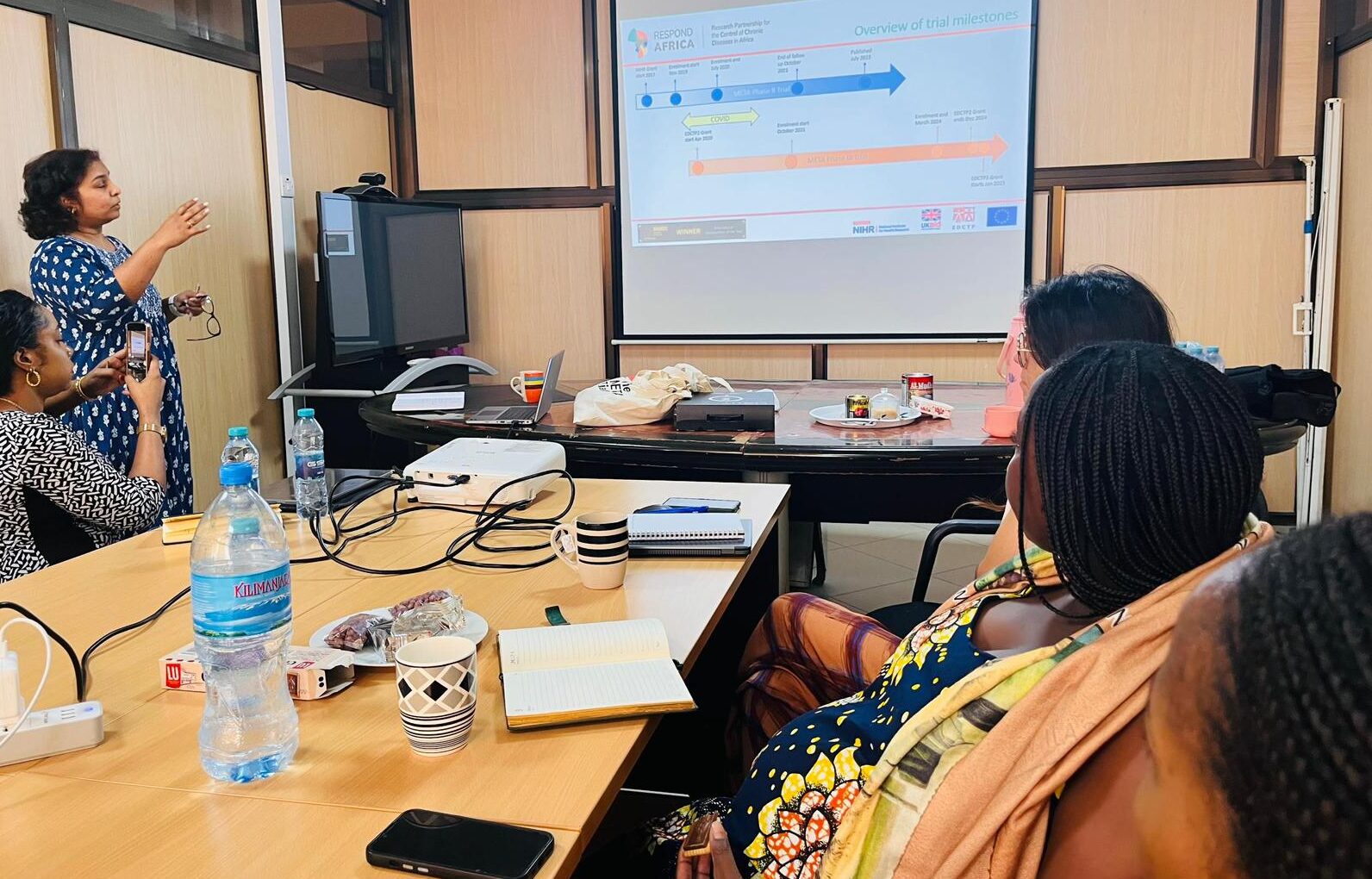
Dr. Anu Garriba (META Trial Coordinator) speaks with HCPs and other staff about advancing progress on the META Trial objectives
Such models demonstrate that when mentorship is intentional, research collaborations can become powerful spaces for cultivating the next generation of African scientific leaders.Â
I am a testament to the success of this supportive model, having received a scholarship for an MSc in Epidemiology at the London School of Hygiene and Tropical Medicine in 2020. I am currently pursuing a PhD in Public Health Epidemiology and will soon be a joint first author to be published in The Lancet.
The Unspoken Realities Women Navigate
Beyond structural barriers such as funding and mentorship, many women in science encounter cultural dynamics that are rarely discussed openly.
Scientific institutions—like many professional environments—were historically shaped by male leadership. As women enter and advance in these spaces, there can be subtle expectations about how they should behave: competent but not overly assertive, confident but not too outspoken. Women who speak strongly about ideas or leadership decisions may sometimes be labelled “difficult†or “too vocal descriptions that male colleagues are less likely to encounter.
At the same time, success itself can sometimes invite suspicion.
In male-dominated environments, women’s professional achievements are, at times, implicitly attributed to favouritism rather than merit. Rumours can circulate in the background, suggesting that advancement must have come through personal relationships rather than hard work or intellectual contribution. Such narratives can be deeply discouraging. Not only because they undermine credibility, but because they reveal how uncomfortable some systems remain with women’s success. Alongside these dynamics, research continues to document the persistence of sexual harassment and gender-based power imbalances within institutions. A landmark report by the U.S. National Academies found that sexual harassment remains widespread in scientific fields and significantly affects the retention and career progression of women researchers (National Academies of Sciences, 2018).
Although many institutions now have policies addressing harassment, power dynamics in hierarchical environments can still make it difficult for early-career researchers to speak openly. These experiences are not always visible in institutional narratives, yet they remain part of the everyday landscape many women quietly navigate.
The Personal Cost of the Journey
Professional pressures rarely exist in isolation.
Research careers often involve travel, fieldwork, conferences, deadlines, and long hours spent writing grants or analyzing data. For many women, these demands intersect with expectations within family life. Balancing research responsibilities with caregiving roles can create a quiet but persistent tension that often leads to burnout. Many women feel stretched between multiple identities—scientist, parent, partner, mentor—while worrying that they are not fully present in any one role. Long hours devoted to research can bring a deep sense of guilt about time spent away from children. At the same time, slowing professional progress can feel like risking years of training, being seen as unreliable, or missing critical opportunities. These emotional negotiations shape the lived experiences of many women building careers in science.
And often, the hardest battles happen in silence: those moments when self-doubt quietly whispers, tutatoboa kweli? — will we really make it through?
Why Women’s Perspectives Matter in Global Health
Yet despite these challenges, African women scientists are increasingly shaping research agendas across the continent. Their work is helping shift attention toward areas that have historically received less focus in global health research: community health systems, integrated care models, gender inequities in access to care, and the lived experiences of marginalised populations navigating complex health systems. Increasing women’s participation in science is also central to achieving Sustainable Development Goal 5, which calls for gender equality and women’s full participation in leadership and decision-making (United Nations, 2015). When women participate fully in scientific inquiry, research questions expand, and health systems become better equipped to respond to the communities they are meant to serve.
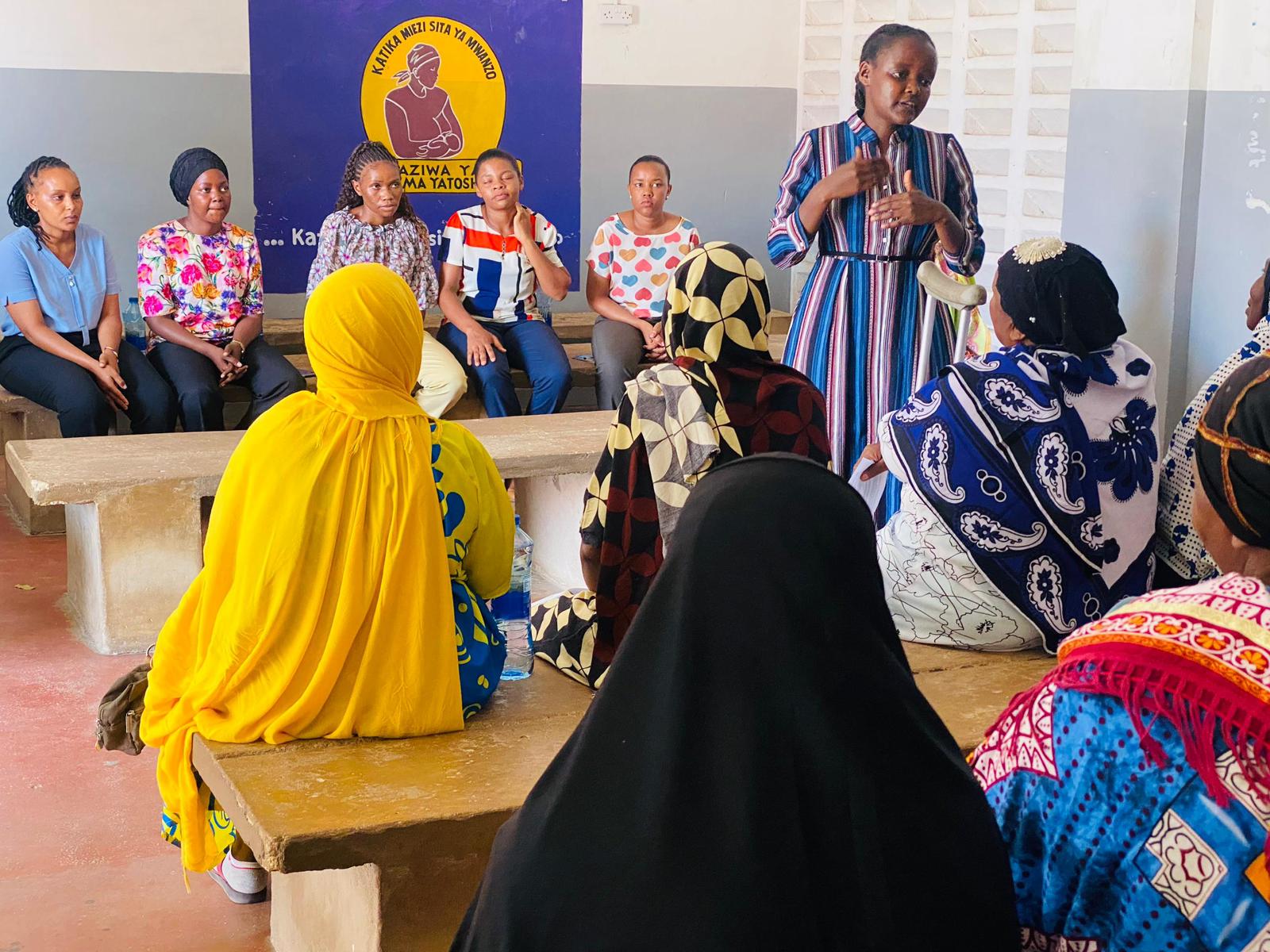
Education session on diabetes, hypertension and HIV, led by Nurse Aneth Mtui
Walking The Uncertain Path
Scientific careers are often described through tidy timelines and predictable milestones. In reality, the journeys of many women in science are far more complex. They bend around barriers, pause for life’s responsibilities, and move forward through persistence, resilience, and an enduring belief that the work matters.
An uncertain path is not a lesser path. It is simply the reality of building knowledge while navigating institutions and structures that were not originally designed with women in mind. We must build systems in which mentorship is accessible, early-career funding is available, and women’s achievements are recognised without suspicion. The path may not always be straight.
But with every woman who continues walking it, science becomes a little more inclusive, a little more representative, and a little more responsive to the world it seeks to understand.
This is written in recognition of the many women navigating this path—and in quiet solidarity with them.
References
- Ezeh, A. C., Izugbara, C. O., Kabiru, C. W., Fonn, S., Kahn, K., Manderson, L., … Thorogood, M. (2010). Building capacity for public and population health research in Africa: the consortium for advanced research training in Africa (CARTA) model. Global Health Action, 3(1). https://doi.org/10.3402/gha.v3i0.5693
- National Academies of Sciences, Engineering, and Medicine, Policy and Global Affairs, Committee on Women in Science, Engineering, and Medicine, Committee on the Impacts of Sexual Harassment in Academia, Benya, F. F., Widnall, S. E., & Johnson, P. A. (Eds.). (2018). Sexual Harassment of Women: Climate, Culture, and Consequences in Academic Sciences, Engineering, and Medicine. National Academies Press (US). https://doi.org/10.17226/24994
- Powell K. (2015). The future of the postdoc. Nature, 520(7546), 144–147. https://doi.org/10.1038/520144a
- UIS – UNESCO Institute for Statistics (2020). Women in science [fact sheet n°60]. UIS/ FS/2020/SCI/60, UIS Publ., Montreal, QC, Canada. Available at: http://uis.unesco.org/ sites/default/files/documents/fs60-women-in-science-2020-en.pdf.
- United Nations. (2015). Transforming our world: The 2030 Agenda for Sustainable Development. New York: United Nations. https://sdgs.un.org/2030agenda
- GWL Voices. (2025). Spotlight: Women in Global Health Leadership. Geneva: GWL Voices. https://www.gwlvoices.org/actions/spotlight-women-in-global-health
About the Author
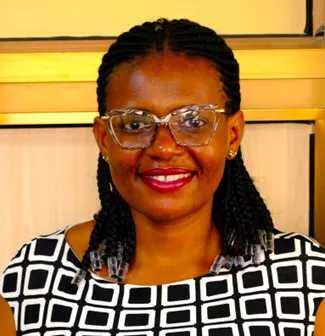
Dr. Faith Aikaeli is a Tanzanian medical doctor and epidemiologist currently pursuing a PhD in Public Health Epidemiology. Her research focuses on integrated care models for chronic conditions such as diabetes, HIV, and hypertension in East Africa. She works closely with regional and international research collaborations and is committed to strengthening African-led research, mentoring young women in research and public health, and advancing health equity and access to care across the continent.